How to choose your next lens

The lens that came with your camera is a good start, but at some point it limits you: too dark indoors, too short for wildlife or not wide enough for interiors. Choosing a new lens is easier when you start from evidence rather than wish lists. This guide walks you through what you photograph, which focal lengths you already use, how much light you need, what you will carry and how to think about budget, so the next lens fills a real gap.
Quick guide by subject
| Subject | Typical focal length (full frame) | Section |
|---|---|---|
| Landscape, interiors | About 14–35 mm | 1 |
| Everyday, travel | About 24–70 mm zoom or 35–50 mm prime | 1 |
| Portraits | About 50–135 mm | 1 |
| Sport, wildlife | About 100–600 mm | 1 |
| Small subjects | Macro, about 50–200 mm | 1 |
| Low light | Wide aperture, f/1.4–f/2.8 | 3 |
| Focal length on a crop sensor | Divide by about 1.5–1.6 (approximate) | 2 |
1Start from your subjects
A lens is a tool for a job. Write down the three subjects you photograph most, and the moments when your current lens let you down. A clear problem, such as “birds are always too small” or “indoor shots are blurry”, points to a lens type.
- List your three main subjects and one frustration for each.
- Match each to a range: wide for big scenes and rooms, standard for everyday, short tele for people, long tele for distant subjects, macro for small ones.
- Prefer the lens that solves the most frequent problem, not the rarest one.
2Check the focal lengths you already use
Your photos record the focal length in their metadata (EXIF). Looking at a few hundred of your favourite pictures shows how you actually shoot. If most zoom shots sit at one end of the range, you are asking for more in that direction.

- Open your favourite photos in a viewer or editor that shows EXIF data and note the focal length.
- Count roughly how many fall at the short end, the middle and the long end.
- If most are at the widest setting, consider a wider lens; if most are at the longest, consider a longer one.
- If they cluster at one focal length, a prime at that length can be a light, bright upgrade.
3Decide how much aperture you need
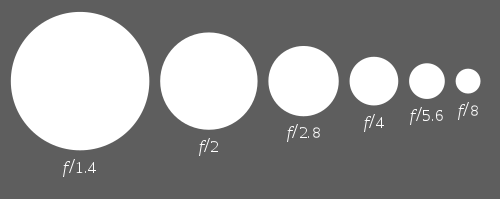
Maximum aperture affects two things: how much light you get (handy indoors and at night) and how shallow the depth of field can be. Each full stop wider doubles the light, so f/2 gathers about twice as much as f/2.8 and about four times as much as f/4.
Wider apertures make lenses bigger and heavier. If you shoot mostly outdoors in daylight with a stable camera, a modest aperture may be enough.
- For low light and blurred backgrounds, look at f/1.4–f/2.8.
- For daylight travel and landscapes, f/4 or a variable-aperture zoom is often enough.
- Remember stabilisation helps with still subjects in dim light but does not freeze moving ones.
4Weigh size, weight and handling
A lens that stays at home takes no photos. Check its weight with your camera, its length, and whether it balances in your hands. Also note the filter size if you use filters, and the closest focusing distance if you like detail shots.
- Add camera and lens weight and imagine carrying it for a whole day.
- Check that the lens fits your bag and, for long lenses, whether it has a tripod collar.
- Look at the minimum focus distance and the filter thread size in the specifications.
5Check compatibility
Lenses are made for specific mounts and sensor sizes. A lens designed for a smaller sensor may vignette on a larger one, and adapters can affect autofocus. Confirm that the lens fits your camera and supports its autofocus and stabilisation features.
- Confirm the mount and the sensor format the lens is designed for.
- On a crop-sensor camera, multiply the focal length by the crop factor to see the equivalent framing.
- If using an adapter, check reported autofocus performance before relying on it.
6Think in budget tiers, not price tags
Lenses fall roughly into three groups. Entry-level lenses are light and affordable, often with variable apertures and plastic parts. Mid-range lenses improve sharpness, autofocus speed or aperture. Professional lenses add constant wide apertures, weather sealing and robust builds, at much higher size, weight and cost.
Used lenses from reputable sellers and older designs can offer good value, since lenses age more slowly than cameras.
- Decide the maximum you will spend before reading reviews.
- Compare independent tests of sharpness, autofocus and flare at the focal lengths you will use.
- If buying used, check for scratches, haze, fungus, smooth zoom and focus rings and a working autofocus.
7Try before you commit
Specifications cannot tell you how a lens feels. Renting or borrowing a lens for a weekend shows whether the focal length and weight suit you.
- Rent or borrow the lens and use it on your usual subjects.
- Shoot a few test frames at wide open and stopped down and view them at 100%.
- Keep the receipt and check the return policy when buying new.
Before you choose
- Main subjects listed
- Most used focal lengths checked in EXIF
- Aperture needs decided
- Weight with camera checked
- Mount and sensor format confirmed
- Budget tier set
- Independent tests read
- Rental or return option checked