How to photograph kids' sports

Children's matches, races and practices are fast, unpredictable and full of emotion, which makes them both fun and challenging to photograph. You do not need professional gear to get good results. This guide covers how to freeze motion, keep focus on a moving child, pick a lens and position, handle dim gyms, time the action and share photos respectfully.
Starting settings (approximate)
1Freeze the action
Running children and flying balls need short shutter speeds. Use shutter priority or manual with auto ISO so the camera keeps the speed you choose.
- Set 1/1000 s for running and ball sports.
- Use 1/500 s for slower movement.
- Turn on auto ISO with a sensible maximum.
2Keep focus on a moving child
Continuous autofocus follows the subject as it moves towards or away from you. Subject tracking or eye detection helps keep focus on one child in a group.
- Set continuous autofocus (often called AF-C).
- Use a zone or tracking area, and start it on your child.
- Try back-button focus so you can track without firing.
3Choose a lens and a position
Fields are large, so a telephoto zoom helps. Standing low and at the corner or end of the field lets you see faces as players come towards you.

- Use about 70–300 mm outdoors on full frame (about 50–200 mm on APS-C).
- Stand where the action comes towards you, not behind it.
- Kneel or sit to shoot at the children's eye level, where allowed.
- Follow the venue's rules about where spectators may stand.
4Handle indoor light
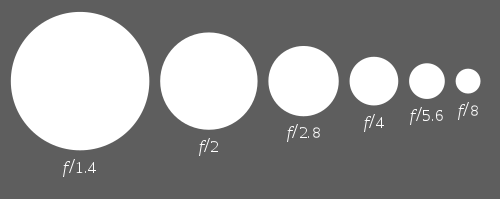
Gyms and halls are darker than they look and often have flickering lights. A wide aperture and a high ISO are normal here; some noise is better than blur.
- Use the widest aperture you have, ideally f/2.8 or wider.
- Accept ISO 3200–6400 or higher; reduce noise later.
- Try about 1/500 s if 1/1000 s is too dark.
- Use the mechanical shutter and anti-flicker mode if bands appear.
5Time the moment
Action peaks in short moments: a kick, a jump, a finish line. Emotion before and after the play is often the best picture.
- Use burst mode and short bursts around peak moments.
- Learn the game so you can anticipate where play goes.
- Keep shooting after goals and at the end for reactions.
6Respect others
Many clubs and schools have rules on photography, and other families may not want their children photographed or shared.
- Check club or school photo policies before the event.
- Do not use flash if it is not allowed or could distract players.
- Ask before sharing photos where other children are recognisable.
Before the game
- Photo policy checked
- Shutter speed 1/500–1/1000 s
- Auto ISO with maximum set
- Continuous AF and tracking on
- Burst mode on
- Telephoto lens fitted
- Position chosen facing the action
- Batteries charged and cards empty